

 Think Anyway.
Society
AI, Digital Intervention, and their Potential Ability to Gatekeep Human or Constitutional Rights
- Society
- Technology
In 2026, new technologies are emerging that are threatening people’s rights to free speech, privacy, and free trade, among others. These technologies mainly centralize communication, transportation, justice, and financial systems. Though some have existed for decades, like credit and debit cards, the “final boss” of these technologies is Artificial Intelligence (AI). AI-based frameworks can collect and analyze data much more quickly and at a level that has never been achieved. These machines are constantly getting trained on new information and continue to improve rapidly. As it develops, AI and the surveillance and digital intervention systems that will depend on it get more powerful and harder to regulate, shut down, or escape from. The danger is not only censorship itself, but the conversion of political power into automated technical control (one of the tools used for this control will be AI systems).
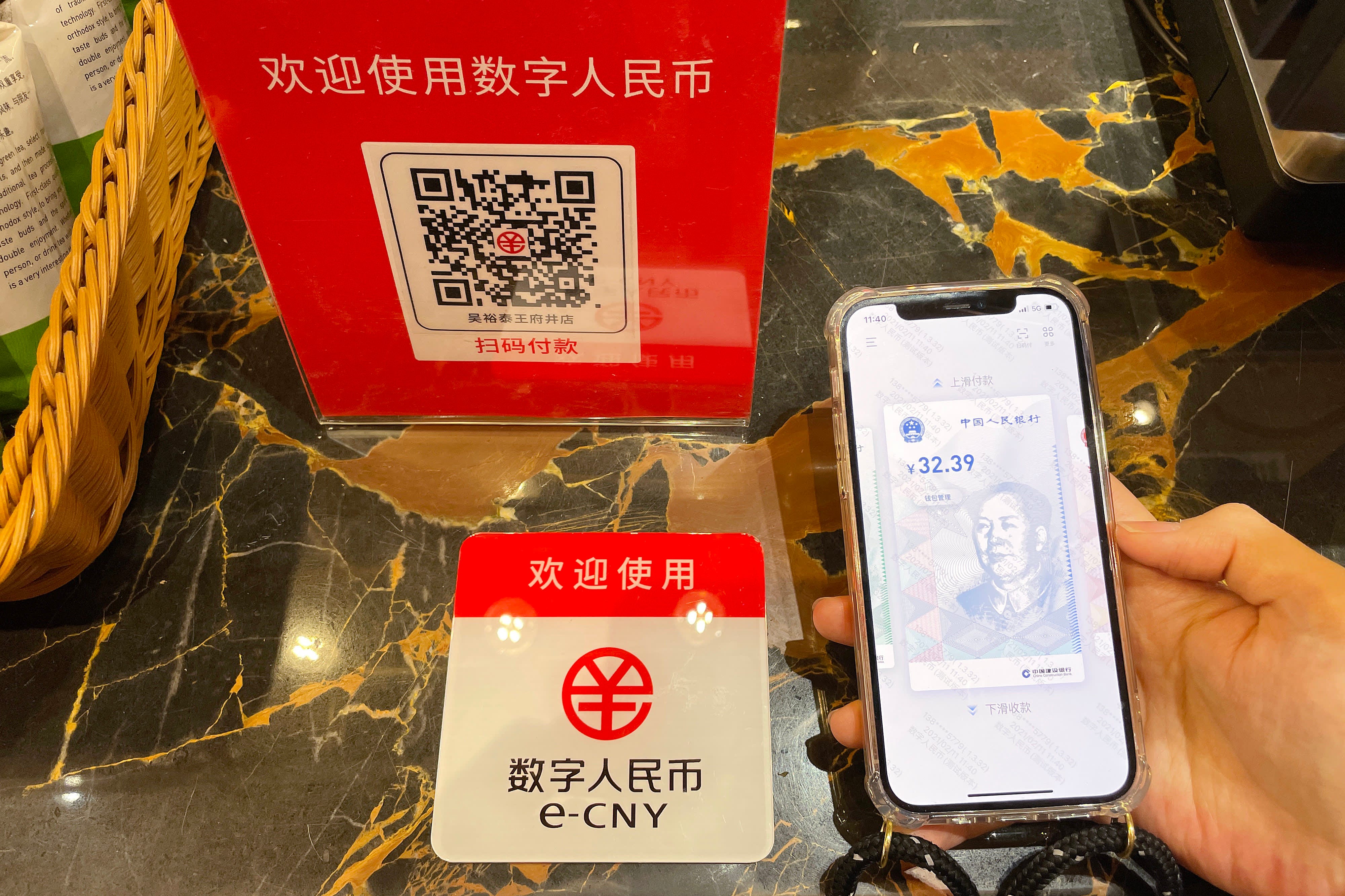
The U.S. is deciding how to respond to China's digital yuan
China’s digital Yuan Central Bank Digital Currencies, digital IDs, and algorithmic scoring matter because they can turn access to money, speech, and services (like transportation or utilities) into conditional permissions. The Austrian School fits well into this idea because it explains why centralized systems fail at handling dispersed knowledge and why top-down control often creates unintended consequences. Digital interventionism threatens liberty because it allows the state to coordinate society through set codes rather than slower, more “analog” processes like court hearings; the “if-then” rules in the code replace spontaneous order with programmable control.
States no longer intervene in financial transactions or communications through laws and police, but through digital systems that are either autonomous, semi-autonomous, or managed by government officials. Digital interventionism can range from rules enforced through platforms, databases (which are continuously being built), payment rails, identity systems, and automated moderation. Payment rails are “the underlying systems and networks that move money from one party to another, such as card networks, wire systems, and real-time payment networks.” (Stripe) Using these systems weakens citizens’ liberty because they are centralized and controlled by a relatively small group, which removes accountability, which makes them vulnerable to censorship and makes it easy for a government to deny their participation in the economy or in society.
When this kind of technology wasn’t as advanced, government intervention was often visible and contestable. Digital governance systems are different because they are continuous, scalable, and often invisible to the user. This makes intervention more precise and targeted: the state does not need to ban something outright if it can throttle, score, flag, or de-platform it. Digital governance dramatically increases the efficacy of law enforcement, and though this might sound like a good thing, it has to be kept in mind that there are a lot of bad actors in power who use these tools inappropriately. What happens when a government which is influenced by the trajectory of society’s worldviews (and few would agree those are progressing positively) decides that a certain religious or political belief, business, or group of people is unacceptable and that there must be some sort of an “intervention”? This is where digital governance frameworks come in. They make it easy to cancel financial or information transactions before they happen, and can even restrict people’s transportation (as they do in some parts of China) in public spaces. Digital governance reduces the need for physical interventions by law enforcement agents, making law enforcement much more scalable and efficient.
Aside from freedom of speech and religion concerns, digital intervention in the financial sector can harm society because it is used by central authorities to attempt to regulate economic activity that they might not fully understand. In “The theory of dynamic efficiency”, Jesús Huerta de Soto argues that “for the same entrepreneurial force which propels dynamic efficiency through the creation and discovery of new profit opportunities is precisely the one which achieves the highest degree of static efficiency humanly possible at each moment by coordinating pre-existing maladjustments.” (Huerta de Soto) He essentially argues that individuals, not central economic planning agencies, are responsible for solving problems (or planning) in the economy. Even with AI, it is impossible for an economic planning authority to know and understand all of the nuances that go into any region’s economy. In “The Use of Knowledge in Society” (1945), Friedrich A. Hayek makes a point that reminds of the internet: “The common idea now seems to be that all such knowledge should as a matter of course be readily at the command of everybody, and the reproach of irrationality leveled against the existing economic order is frequently based on the fact that it is not so available. This view disregards the fact that the method by which such knowledge can be made as widely available as possible is precisely the problem to which we have to find an answer.” (Hayek). Though that answer has been found (the Internet), and knowledge more widely available than ever, the knowledge problem still has not been solved. AI tools consolidate and process information and data in seconds. Though AI will help analyze data about commerce and industry on a level like never before, that doesn’t justify giving it the power to deny transactions, nor is it an excuse to feed it all that supposedly private financial information. As much as AI knows, it will never know everything. The price system already exists to coordinate decentralized knowledge and prevents the need for one authority to know everything.
There is no good reason (though there are many bad reasons) as to why a government should switch to digital currency and phase out cash, but there are many reasons not to, including privacy and power concerns. The US, for example, already has digital currencies. However, the digital money is held and only accessed by private banking institutions, not a government (unless it has legal authority or takes other controversial surveillance decisions). Privatized banking is still quite centralized and does not guarantee privacy, which is why it’s good that consumers and producers have options like Crypto or Bitcoin if they want to have a less trackable “digital cash”. Among these censorship/restriction/tracking-resistant alternatives, continuing to use cash and making an effort to keep it alive even in a time when so many businesses are going cash free is one of the easier and cheaper options. In the worst case scenario, if a government phases out cash, people can still keep using it or just come up with a new currency not printed by a government. They could go back to bartering goods and services. This is pretty unlikely to happen though. Humans just wouldn’t let any central authority get away with this (though that is challengeable because society has already let different governments and big businesses get away with outrageous violations of privacy or human rights). If money can be monitored or restricted at the transaction level, financial autonomy becomes conditional rather than secure. Digital interventionism is dangerous because it gives too much power to a central authority that could easily become corrupt (due to human nature) and assumes the state can process and direct behavior better than voluntary order can.
A concern about digital interventionism that is probably more mainstream is the worry of digital IDs linking a person to services, payments, travel, and online participation. The risks are quite evident as to why this is not something one should be in favor of. And yet, so many people defend the policy of digital IDs seemingly thinking that they could never be targeted by that technology. For example, in the US, many defend RealID verification being required to fly or ride some trains in the name of border and immigration control, not realizing that the minute they become a target because of their worldviews or any other reason, that same technology they advocated for might be used to censor, deport, incarcerate, deny travel to, or even kill them. Once identity is universalized, anonymity shrinks and exclusion becomes easier, and this applies to anyone and everyone within that system, whether criminal or not, illegal immigrant or not, Muslim or not, Jewish or not, atheist or not, Christian or not, and so on.
In 2019, South China Morning Post published an article that reports “China has restricted the sale of 20.47 million plane tickets and 5.71 million high-speed train tickets as punishment for failing to repay debts or conducting other “untrustful” behaviour, according to data from National Development and Reform Commission,” and that “In total, 13.49 million individuals have been classified as untrustworthy as of the end of March, according to the state planner.” (Lee) These are shocking numbers and this was about 7 years ago. Imagine how much more advanced it has become now that AI surveillance and literal gatekeeping systems are in place and rapidly being implemented, especially in countries like China. Social scoring systems are a very real threat, and they have a very tangible impact on millions of lives. In the US, the “no-fly list” has contained tens of thousands of names, with reporting putting it at about 16,000 in one period and about 21,000 in another (Khaki) - relatively little compared to what is happening in China. However, in the US there are social and financial social credit systems (literally financial credit systems) that have been in place for decades. If someone in the US wants to buy a house, chances are they will not be able to afford it in cash. In 2025, only about 29% of homebuyers paid in cash (Anderson). Most people have to get a mortgage. To get approved for a loan, they have to build credit; and to build credit they have to use a credit card that is digitally tracked and can be used to easily trace them. According to the fact-checking website Snopes, “1989 is when Fair Isaac — the same company that pioneered the use of statistics in assessing credit risk in the 1950s — introduced the first generic statistical credit score, known as the FICO score” (Wazer). There had been credit scoring models for much longer before 1989, but that’s when FICO came out. Eventually the FICO score became the main method used for most lenders to analyze their customers and share data about them. It is now a centralized system and it is the widely used standard. Not a monopoly, but with similar cons. The FICO system is pretty difficult to buy a house without. Fortunately, alternative housing ideas are gaining traction, and society will naturally solve that perfect example of an economic problem… eventually.
Freedom of expression has been threatened for as long as humans have lived together. It’s as simple as party A finding out that party B is communicating things that are not in the favor of party A to be communicated. This is a tale as old as time. Now in the Information Age, freedom of speech is dramatically more at risk; most communication, whether mass or interpersonal, happens online and can easily be monitored and gate-kept by government or big business. Though there were definitely privacy concerns in the time of postal communication, postal communication was simply happening at such a scale that it was very difficult to monitor what people were saying or censor them. It is still this way with the USPS, but when it comes to cloud-based communications, anyone with access to that database can read and/or block information from passing from one device to another. Now with AI (if enough data centers get built, because this is not currently feasible), every single message, post, email, etc. can be monitored and even blocked before it leaves the computer. This is dangerous because it threatens people’s freedom to gather, freedom of the press, freedom of religion (as long as they don’t violate others’ rights), and even their right to participate in the economy. The rules given to the AI algorithm are the rules the AI adheres to when making a decision on whether to allow a user to publish something or list a product or service. There is no human middleman to make exceptions or spot errors the AI made because it didn’t have enough context. On social media or online selling platforms, content moderation, platform rules, and AI-assisted enforcement can become a public-private hybrid of censorship. There already exist platforms that allow people to essentially surveil and report on each other, like Nextdoor, where verified neighbors share “tips” (it has been criticized because because of frequent racial profiling done by some users) or various anonymous college group chat apps or the controversial app Tea, where women share their experiences with different men in order to warn other women of catfishes, cheaters, or other dangers. The point is not that every moderation system is bad, but that when political authority shapes the infrastructure, speech becomes easier to manage from above. Giving the proportionately few publicly-elected government officials authority to access and gate-keep the flow of information through these platforms just makes worse the problem of people spying on people. All this accountability, for what? This universal social surveillance and social justice (think cancel culture) doesn’t work because humanity will never agree on a clear moral standard. People have all this accountability but we’re not sure what the rules even are. Teens today are more hesitant to be “cringe” or do edgy or risky things because they are used to constantly being perceived. More specifically, they’re used to often being recorded, shot, and posted or monitored from somewhere they can’t see. They are told not to post footage of themselves partying as some kind of recruiter might see it and deny them an opportunity, but even yet they are reluctant to just dance because they know someone else might record and post without their knowledge or consent. Adding the element of universal digital finance, communication, and transportation framework to the “increasingly-almost-universal surveillance” would bring developed society one step closer to dystopia. The system of universal economic or social interventionism will not work, because no central planning authority could possibly (even with AI) know the nuances of unique situations, places, times, people, and industries. A central planning authority will not be able to make interventions that are fair to everyone. Nor is there much but simple and often bypassed checks and balances to keep a central planning authority from infringing on human or constitutional rights.
There are valid reasons to implement more digital intervention systems, like security, fraud prevention, preventing money laundering, public safety, and administrative efficiency, to name a few. However, good intentions do not remove the knowledge problem (that no central planning agency could possibly know the nuances of everything even with AI), and centralized systems tend to expand beyond their original purpose. Even simpler, scale itself can turn a narrow intervention into bread control. If state power is written into code, liberty depends on its system’s design, not just constitutional ideals. The tipping point is whether digital systems will remain as tools for voluntary coordination or become tools for silently enforced obedience.
References
Anderson, Dana. “29% of U.S. Home Purchases Are Made in Cash, Essentially Flat From a Year Ago.” Redfin News, 17 Oct. 2026, https://www.redfin.com/news/all-cash-down-payments-2025/.
Hayek, Friedrich A. “The Use of Knowledge in Society.” Sept. 1945. The Library of Economics and Liberty, https://www.econlib.org/library/Essays/hykKnw.html.
Huerta de Soto, Jesús. The Theory of Dynamic Efficiency. 2009, https://www.jesushuertadesoto.com/en/books/the-theory-of-dynamic-efficiency-en/. Jesús Huerta de Soto.
Khaki, Ateqah. “No Fly List Grows, Along With Injustice For Those Wrongly Stuck On It.” ACLU, 2 Feb. 2012, https://www.aclu.org/news/national-security/no-fly-list-grows-along-injustice-those-wrongly.
Lee, Amanda. “China’s Credit System Stops the Sale of over 26 Million Plane and Train Tickets.” South China Morning Post, 18 Apr. 2019, https://www.scmp.com/economy/china-economy/article/3006763/chinas-social-credit-system-stops-sale-over-26-million-plane.
Stripe. “What Are Payment Rails? A Guide to the Major Payment Networks.” Stripe, 21 May 2026, https://stripe.com/resources/more/what-are-payment-rails.
Wazer, Caroline. “Homebuyers Didn’t Have To Worry About Credit Scores Until 1989? Not Quite.” Snopes, 12 Jan. 2025, https://www.snopes.com/fact-check/homebuyers-credit-scores/.

